Lessons From
Traditional Wadas

Courtyards, shaded thresholds, natural ventilation and layered privacy reveal how traditional Wadas created homes that were climate-responsive, social and deeply rooted.

Read Journal
Timeless architecture is not old.
It simply never stops being relevant.

What Wadas still teach us
about designing well.

These principles belong to no single style. They continue to offer relevant, practical guidance for homes, hospitality spaces and contemporary architecture.

Lessons From Tradition
01 Climate & Light

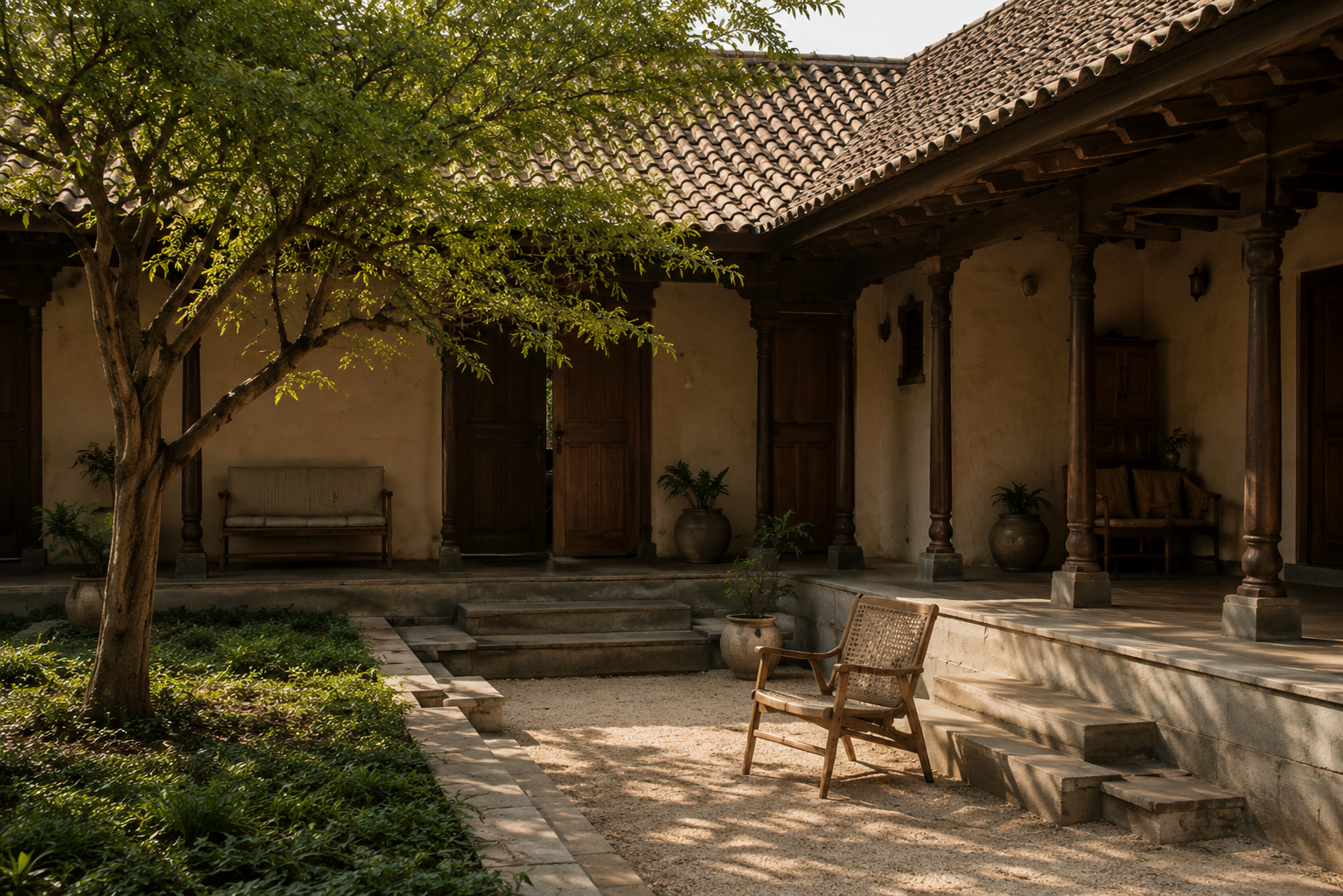
Courtyards are climate machines

The central chowk was far more than a visual feature. It introduced daylight, released rising warm air and created a shaded internal world protected from harsh weather. It also became the social heart of the home—proving that environmental performance and human connection can grow from the same architectural move.
02 Comfort Without Devices

Natural ventilation begins with planning

Openings, internal courts, verandahs and room depths were composed to keep air moving through the building. Comfort came from orientation and section—not from mechanical correction. The lesson remains powerful: energy efficiency should begin at the planning table, long before equipment is selected.

03 Thresholds & Privacy

Privacy works best in layers

Wadas rarely moved abruptly from public to private. Entrance courts, transitional passages, semi-open verandahs and internal rooms created a gradual shift in atmosphere. Contemporary homes can learn from this softness—using sequence, filtered views and intermediate spaces instead of relying only on closed doors.

04 Material Honesty

Choose materials that age with dignity

Timber, stone, lime plaster, clay tiles and metalwork were selected because local craftspeople understood them and because they matured beautifully over time. Their imperfections became character. Durable design is not about keeping a space permanently new; it is about allowing use, weather and memory to enrich it.

05 People Before Display

Community is a form of luxury

The value of the Wada was found in how it brought generations together while still allowing retreat and privacy. Shared courts, platforms and verandahs made everyday encounters natural. In a time when luxury is often measured through size or finish, Wadas remind us that belonging may be the most valuable amenity.

Traditional Wada courtyard architecture
Good architecture does not fight nature. It learns how to live with it.

Lessons carried through generations

Create a space rooted
in place, people and purpose.

Whether it is a home, retreat or hospitality environment, we bring together architecture, interiors and nature to create spaces that feel lasting and deeply personal.

Start Your Project